Solar Performance
“Why is my solar generating less than usual?”
Not sure what a fault code means, why your solar generation has dropped or whether your battery is behaving normally? Send your question to Mr Solar and our team will help you understand the sensible next step.

You do not need to know the technical language. Tell us what the system is doing, include any warning code you can see and we will help point you in the right direction.
“Why is my solar generating less than usual?”
“What does this red light or error code mean?”
“My solar has completely stopped producing electricity.”
“Why is my battery charging or discharging differently?”
“Will this change affect my Feed-in Tariff or export payments?”
Some questions can be answered from the information you provide, but no remote assessment can electrically test your system, inspect hidden wiring or confirm that an installation is safe.
Common causes including inverter problems, FIT meter issues, dirt, wiring and installation faults.
Solar generation guide →Error-code guidance and professional diagnosis for legacy and modern solar PV inverters.
Inverter fault guide →Professional testing, inspection, inverter replacement, battery diagnostics and system takeover.
Repair support →Ongoing support, servicing and membership options for suitable orphaned solar and battery systems.
Rescue Service →Mr Solar provides professional solar PV and battery testing, inspection and repairs across Norfolk and Suffolk, including systems originally installed by other companies.




Send the details directly to our team and include as much information about the system or fault as possible.
Gorleston: 01493 289118
Norwich: 01603 394104
Keep your existing Contact Form 7 form here.
We can often narrow down the likely cause from the symptoms, fault code, monitoring screenshots and equipment details, but some faults require electrical testing or an engineer on site before a diagnosis can be confirmed.
Only follow the manufacturer’s published user restart procedure. Do not open the inverter or disconnect solar DC connectors.
Yes. Yes. We provide professional repair and Rescue support for suitable systems installed by other companies as well as our own installations.
Yes. We can explain general FIT, generation-meter and export issues. Specific metering or compliance questions may require us to review your system paperwork.
The inverter or battery make/model, exact fault code, postcode, when the issue started and what the monitoring app is showing are all helpful.
Send your question to our Norfolk team for guidance, or book professional support when the problem needs testing or an on-site visit.
A solar-diverter can send suitable surplus electricity to an immersion heater instead of exporting it immediately. It can be valuable—but only where the cylinder, immersion and control arrangement are suitable.
A compatible diverter monitors electricity flow at the grid connection. When surplus solar would otherwise be exported, it proportionally supplies the immersion heater, subject to system limits and the cylinder thermostat.
The control should avoid importing expensive electricity merely to heat water unless a scheduled boost has been chosen.
Cylinder thermostats, over-temperature cut-outs, immersion ratings and protective devices remain essential.
Where a battery is installed, the homeowner should understand whether surplus fills the battery or heats water first.
Diverted electricity gives up its export payment. The value depends on the alternative water-heating fuel and the current export tariff.

Not necessarily. Available surplus changes with season, weather, household demand and array size.
It depends on energy prices, hot-water fuel, export rate and household routine. Compatible systems can be configured around the preferred priority.
Sometimes, but control integration is different. A resistive immersion diverter should not be assumed to control a heat pump correctly.
Tell Mr Solar about your property, electricity use and future plans. We will recommend a system around the building and the way you actually use energy.
GivEnergy Ltd entered administration and ceased trading in April 2026. Mr Solar is not promoting new GivEnergy sales, but we continue to help owners of existing systems with practical diagnostics, electrical checks, monitoring investigation and repair options where parts and access permit.
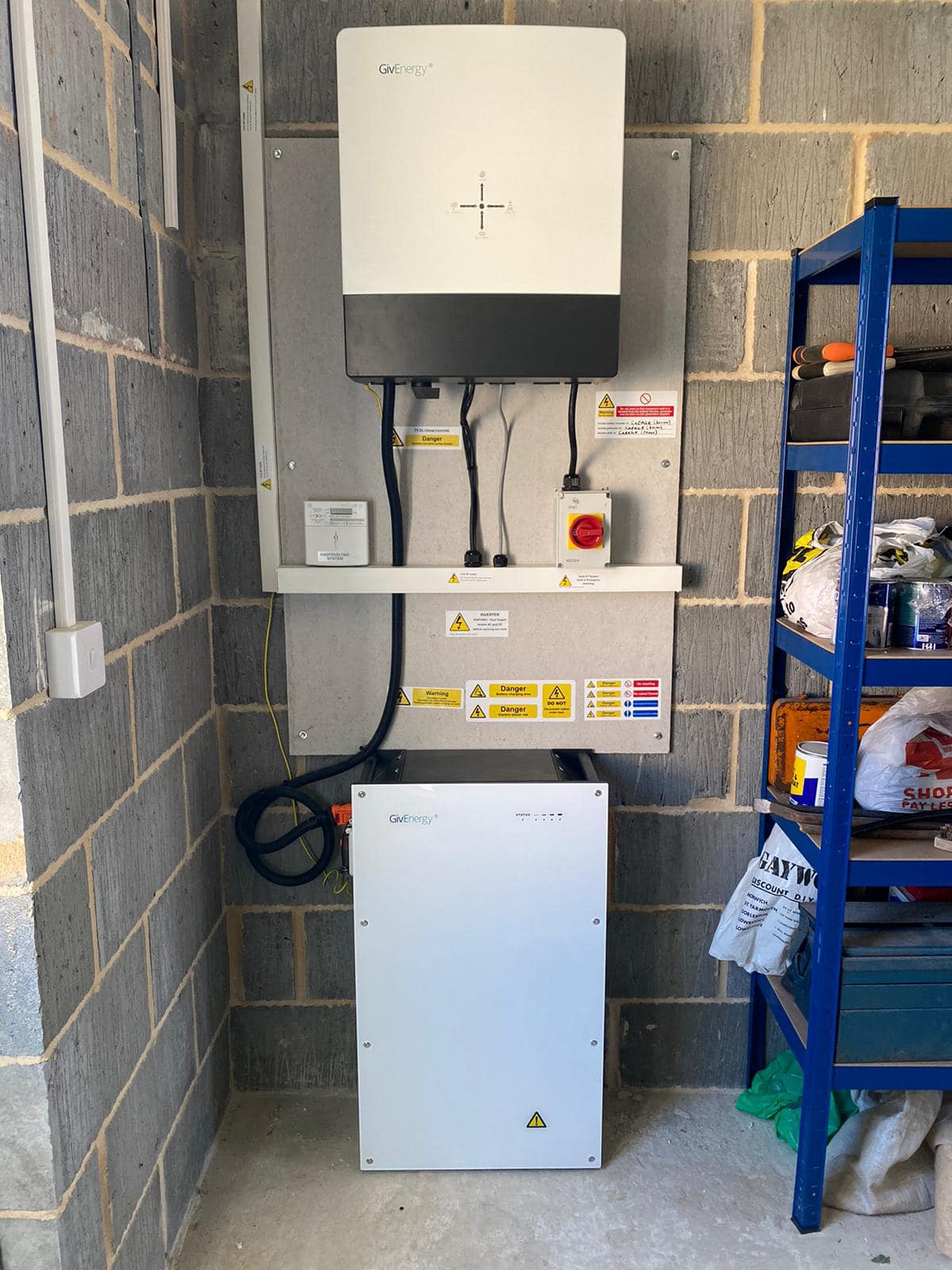
GivEnergy Ltd entered administration on 9 April 2026 and ceased trading with immediate effect. The appointed administrator stated that hardware warranties and ongoing user and software support from GivEnergy Ltd would cease, and advised consumers to approach their installer for initial support.
Verified sources: Companies House — GivEnergy Ltd and the administrator’s notice.

Visual inspection, relevant electrical testing, meter checks and review of inverter or battery indications.
Review available app data, connectivity, meters and symptoms. Cloud or account functions may be outside an independent installer’s control.
Where parts or support are unavailable, we explain safe alternatives and the implications of replacing components.
GivEnergy systems were installed with different capacities and inverter ratings. The model label and system records help separate stored energy from the power the installation can deliver.
Figures are simple energy illustrations, not guaranteed runtime. Allow for battery reserve, conversion losses, temperature, ageing and changing household demand.
Clear photographs of the inverter, battery and serial-number labels.
Fault codes, warning lights and screenshots from any accessible monitoring.
Installation date, original paperwork and when the problem began.
What charges, discharges, imports or exports differently than expected.
Send us the model details, symptoms and monitoring screenshots. We will explain whether an inspection is appropriate and what support can realistically be offered.
Solar Photovoltaic cells are often advertised as an investment that saves you money in the medium/ long run. Let’s consider a a house in East Anglia, The average home electricity power use is;

2,900 kWh per year, priced at 28.34p Per KWH, £822 Per year electricity charge for metered electricity. (According to OFGEM)
Now, the house has a standard concrete roof, tiled, facing South, no Shading, standard
4.0kw (11 Solar Panels) generating 3,600kwh Electric per year;
2,900 kwh (we will use electricity per year )x 28.34p = £821 Per Year
4.kw Solar PV cost £4,995, pay back 6 years + Added re-sale value to the property + added protection of future increases in electricity costs.
If you have fixed your tariff until 2023 in favour of potential future savings as energy sky rockets in price, the maths looks like this,
2,900 kwh per year x 40.0p = £1,160 cost of 4.kw Solar PV £4,995 pay back 4.3 years pay back + Added re-sale value to the property + added protection of future increases in electricity costs.
we can add electricity storage systems, divert solar energy to the hot water emersion if you have a tank for hot water. The above is a simple example and reflects good conditions, so tell us about your situation and we will do the maths for you to check.
You can do some sums on our free Solar PV Calculator
Here we will give the facts about Solar PV Panels and separate the Myth from Fact.
The most asked question is; do I qualify for free solar panels?
Fact, Solar Panels could have been free when the Feed In Tariff was available, so the customer got free daytime electricity and the supplier got the feed in tariff (Rent A Roof). The Feed in Tariff Scheme died in 2019 and many free Solar panels were finished long before this as the Tariff disappeared.
For clarity, this was written on the 19.10.2023.
The ECO4 Scheme is a government-funded energy efficiency scheme that helps low-income households and households that receive certain state benefits to make energy efficiency improvements to their homes. This can include measures such as loft insulation, cavity wall insulation, and solar panel installation.
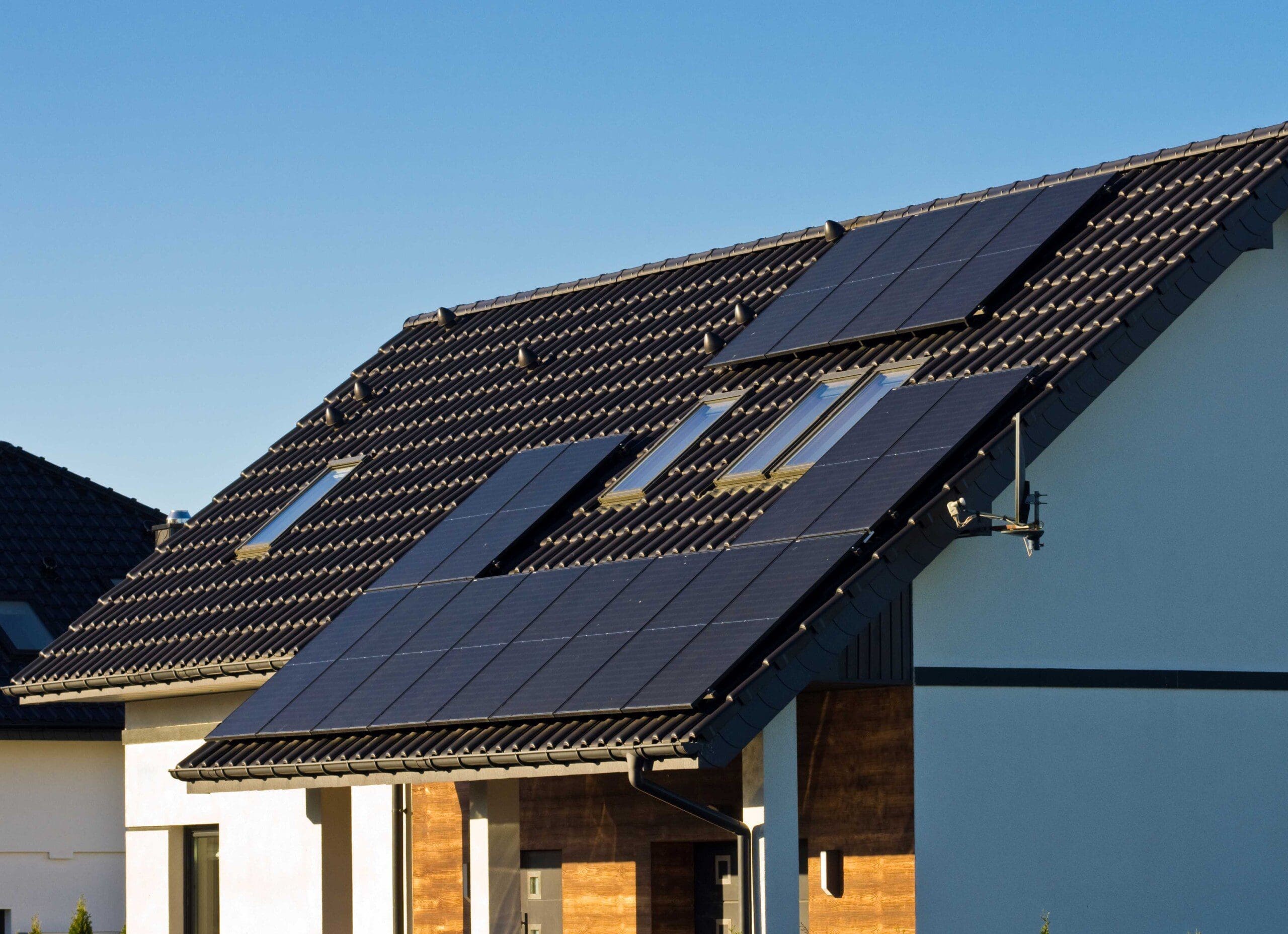
Despite these changes, there remain some common misconceptions around solar panels that prevent many households giving them any thought. So, how much do solar panels cost and how much energy do they produce?
Prices have dropped substantially since the demise of the Feed in Tariff, *SEG replaced this in 2020 and offers very little for you exported electricity, A mislay 4p Per KWH working out to be about £100 per year on a standard Home, we are now forecasted to be paying 41p Per KWH in Oct 2022. However, 0% VAT on your purchase of Solar Panels is a great incentive saving hundreds of £.
Please try our Solar Pv Calculator, this will work out how much you could save and what the likely cost would be.
Information we used, Free Solar Panels by Author;
If you’re budgeting for 2026, the safest assumption is not “prices will fall back to normal” — it’s that electricity will remain expensive, volatile, and harder to control than it used to be.
Even when wholesale prices calm down, UK households still face structural costs that can keep bills elevated. In this page, we break down a pessimistic but realistic view of what could keep electricity costs high in 2026 — and what you can do to reduce your exposure.
In the UK, energy company profits have remained strikingly high while households continue to face elevated electricity bills. Over recent years, major energy producers and suppliers have reported annual profits running into the tens of billions of pounds, with some individual firms posting £20–£30 billion in global profits in a single year, even as domestic customers struggled with record costs.

The UK grid is being upgraded to handle rising demand and major changes in how we use energy — including EV charging, heat pumps, renewables, and growing commercial loads. These upgrades are paid for through network charges included in your bill.
Pessimistic view: even if wholesale prices ease, the “fixed” cost of running and upgrading the grid keeps pressure on unit rates and standing charges.
Although renewable generation keeps growing, gas still plays a major role in setting electricity prices during many periods (especially when demand is high or renewable output is low).
Pessimistic view: any spike in gas prices or supply disruption can quickly translate into higher electricity costs again — and those shocks can happen fast.
Standing charges have become a bigger part of the bill for many households. That means even if you use less electricity, you can still feel like your bills aren’t falling proportionally.
Pessimistic view: standing charges remain stubbornly high, making electricity costs harder to “escape” through efficiency alone.
Electricity demand is expected to rise, not fall — driven by electrification (EVs and heating), as well as growing digital infrastructure like data centres.
Pessimistic view: higher demand increases pressure on peak pricing, which can keep average costs elevated and make peak-time electricity particularly expensive.
A portion of electricity bills comes from policy costs and levies. These can shift over time depending on government decisions and market design.
Pessimistic view: costs are more likely to stay on consumers’ bills than disappear — and electricity may carry an increasing share of transition costs.
High “average” prices compared with pre-2020 levels
Quarter-to-quarter volatility (unpredictable changes)
Expensive peak periods, even if off-peak improves
Bills that don’t fall much, even when you use less (standing charge effect)
In short: electricity might not be “crisis pricing” every month, but it could still feel permanently expensive.
If you plan for electricity staying high, the focus shifts from “hoping prices drop” to reducing your dependence on peak grid power.
Solar reduces how much electricity you need to buy from the grid during the day.
A battery helps you:
store solar for evening use
reduce expensive peak imports
potentially charge off-peak (tariff dependent) and use later
Time-of-use tariffs can reduce costs if your usage is flexible—especially with a battery that can shift consumption away from peak rates.
We’d rather you go into solar and battery with realistic expectations than be sold an overly rosy forecast. A well-designed system can still deliver strong value — but it works best when it’s built around the reality of UK pricing: high peaks, rising fixed costs, and volatility.
If you want to reduce your exposure to rising electricity costs in 2026 and beyond, we can help you understand:
whether solar is right for your property
the right battery size for your usage 
how to design for winter performance (not just summer)
how to make the most of smart tariffs
Get in touch with Mr Solar for an honest assessment and a system designed for real UK conditions.
They might reduce in some quarters, but a pessimistic outlook assumes prices stay elevated due to network costs, demand growth, and continued volatility in gas-driven pricing.
Standing charges include fixed costs like maintaining the network and other system-wide charges. If they remain high, they can limit how much bills fall even when you use less.
High prices generally improve the case for solar and battery, because every kWh you generate or shift away from peak grid usage can save more.
Yes — winter solar generation is lower, but batteries still help by shifting energy to avoid peak rates and improving overall control of your electricity use.
You may not control wholesale markets or standing charges — but you can control how much electricity you buy at peak prices. Find out how solar and battery storage can reduce your reliance on the grid
A calculator is a useful starting point, but a credible result needs roof direction, pitch, shading, usable dimensions and local solar data — not simply a postcode and panel count.
Chimneys, roof windows, ridges, edges and access zones reduce the number of modules that can actually be fitted.
South is not mandatory. East and west arrays can perform well and spread output more evenly through the day.
Trees, neighbouring roofs, chimneys and aerials can affect individual modules and the inverter design.
Temperature, cables, inverter conversion, dirt, mismatch and downtime mean annual AC energy is not simply panel wattage multiplied by sunshine hours.

A 5kWp array is the combined laboratory-rated peak power of its modules. Annual generation is measured in kilowatt-hours and varies with the location and roof.
For example, ten 500W panels equal 5.0kWp, while twelve 450W panels equal 5.4kWp. The larger array will not necessarily deliver the best household value if much of its output is unused or the roof has different shading.
No. Savings also depend on electricity use, tariff, export rate, battery behaviour and future energy prices.
Use the exact input requested. Array size in kWp is panel wattage multiplied by panel quantity and divided by 1,000.
Orientation, pitch, shade, local weather, inverter design and downtime can all differ.
Tell Mr Solar about your property, electricity use and future plans. We will recommend a system around the building and the way you actually use energy.
What are the Benefits of Going Solar?
If you are looking for a way to save money, reduce your environmental impact, and invest in a sustainable future, solar panels are a great option.
How It Works
A lot will depend on two factors, outlay money and your energy usage. The cost of Solar Panels has come down dramatically over the last 10 years so looking for an affordable package is quite easy compared to the early days of the feed in tariff which saw 4kw been sold for £18,995. We now do 4kw Solar pv systems for under £4,995 as a installed and commissioned system with options to upgrade with electricity battery storage.
Electricity consumption, the following figures apply: Low consumption is estimated as being between 1,800kWh and 2,400kWh. Medium consumption at 2,900kWh to 4,200kWh. High consumption is between 4,300kWh and 7,100kWh per year. We will need to check your bills if you don’t know and work out the best system for your needs.
Mr Solar We will provide a detailed proposal taking into account all the areas where we can see to reduce your energy consummation and reduce your bills.
The number of solar panels you need will depend on a number of factors, including:
A solar panel’s wattage rating tells you how much electricity it can generate under ideal conditions. To calculate how many solar panels you need, you can divide your annual electricity usage by the wattage rating of the solar panels you are considering.
For example, if your annual electricity usage is 10,000 kWh and you are considering solar panels with a wattage rating of 300 watts, you would need about 33 solar panels.
However, it is important to note that ideal conditions are rarely met. The amount of sunlight your roof receives will vary depending on your location, the time of year, and the weather. You may need more solar panels than the calculation above suggests to generate enough electricity to meet your needs.
It is also important to consider the efficiency of the solar panels you choose. More efficient solar panels will generate more electricity per watt, so you may need fewer of them.
If you are serious about installing solar panels, I recommend getting a quote from Mr solar. They can help you assess your needs and recommend the right number of solar panels for your home.
Here are some additional things to keep in mind when calculating how many solar panels you need: