
Plug-In Solar Panels in the UK: What Homeowners Need to Know
Plug-in solar panels are a new, lower-cost way for UK households to generate solar electricity without a full rooftop installation. They are designed for balconies, gardens, walls, patios and small outdoor spaces, making them especially attractive for renters, flat owners and homes where standard solar panels are not practical.
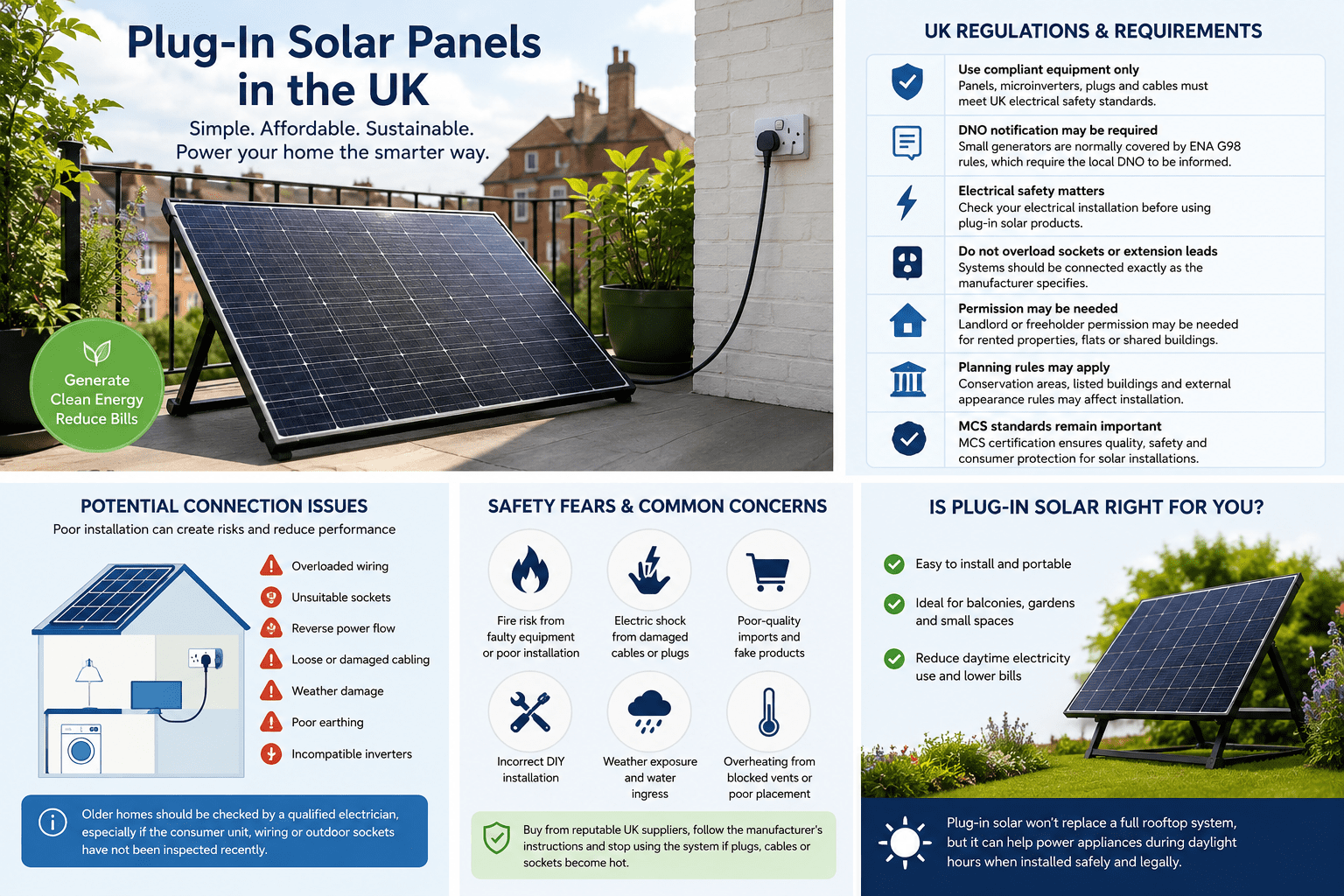
The UK government has announced plans to make plug-in solar available in shops, with new rules intended to make small portable systems safer and easier to use.
Key UK Regulations and Requirements
- Use compliant equipment only: panels, microinverters, plugs and cables must meet UK electrical safety standards.
- DNO notification may be required: small generators are normally covered by ENA G98 rules, which require the local Distribution Network Operator to be informed.
- Electrical safety matters: the IET has warned households to check their electrical installation before using plug-in solar products.
- Do not overload sockets or extension leads: systems should be connected exactly as the manufacturer specifies.
- Landlord or freeholder permission may be needed for rented properties, flats, balconies or shared buildings.
- Planning rules may apply in conservation areas, listed buildings or where panels affect the external appearance of a property.
- MCS standards remain important for professionally installed solar PV systems and consumer protection.
Potential Connection Issues
Plug-in solar systems feed electricity back into your home circuit. This can reduce the power you buy from the grid, but poor installation can create risks. Possible issues include overloaded wiring, unsuitable sockets, reverse power flow, loose outdoor cabling, weather damage, poor earthing, or incompatible inverters.
Older homes should be checked by a qualified electrician before installation, especially if the consumer unit, wiring or outdoor sockets have not been inspected recently.
Safety Fears and Common Concerns
Many concerns around plug-in solar relate to fire risk, electric shock, poor-quality imports and incorrect DIY installation. Electrical Safety First warns that solar systems can present risks if faults, debris, poor ventilation or damaged components are ignored.
To reduce risk, buy from a reputable UK supplier, avoid unbranded marketplace kits, follow the manufacturer’s instructions, keep panels and cables secure, and stop using the system immediately if plugs, cables or sockets become hot.
Is Plug-In Solar Right for You?
Plug-in solar is best for households wanting a simple, portable way to cut daytime electricity use. It will not replace a full rooftop solar system, but it can help power appliances during daylight hours and reduce bills when installed safely and legally.