
Generate More. Store More. Buy Less From the Grid.
Commercial solar PV and battery storage can work together to reduce grid imports, increase use of on-site generation and give businesses greater control over when electricity is bought, stored and used.
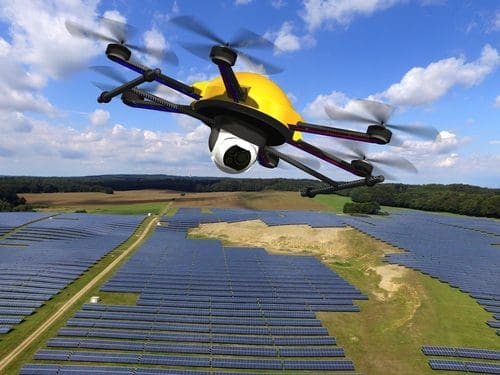
From Large Rooftops to Rural and Ground-Mounted Systems
We design commercial solar and storage around the individual site, whether the opportunity is a warehouse roof, agricultural building, workshop, school, office or suitable ground area.

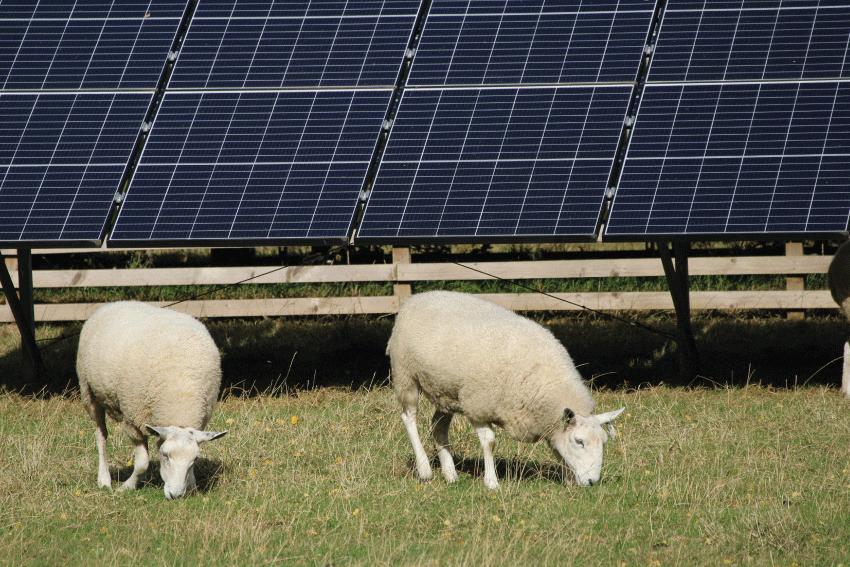

A Battery Gives Commercial Solar More Flexibility
Solar production and business demand do not always line up perfectly. Battery storage allows surplus electricity to be moved into the periods when the site can make better use of it.
Increase Solar Self-Consumption
Store surplus daytime generation instead of exporting it immediately, then use that energy later when the site still has demand.
Reduce Peak Imports
Stored energy can support the site during higher-demand periods, helping reduce reliance on expensive grid electricity.
Use Time-of-Use Tariffs
Compatible storage can charge during suitable lower-cost periods and discharge later, depending on the tariff and energy strategy.
Support EV & Fleet Charging
Solar and battery storage can be designed around workplace or fleet charging so new electrical demand is considered from the outset.
Monitor the Whole Site
Modern platforms can show PV generation, battery state of charge, site demand, import and export through one monitoring system.
Improve Energy Resilience
Where backup is required, suitable equipment can be designed around essential loads and the site’s operational priorities.
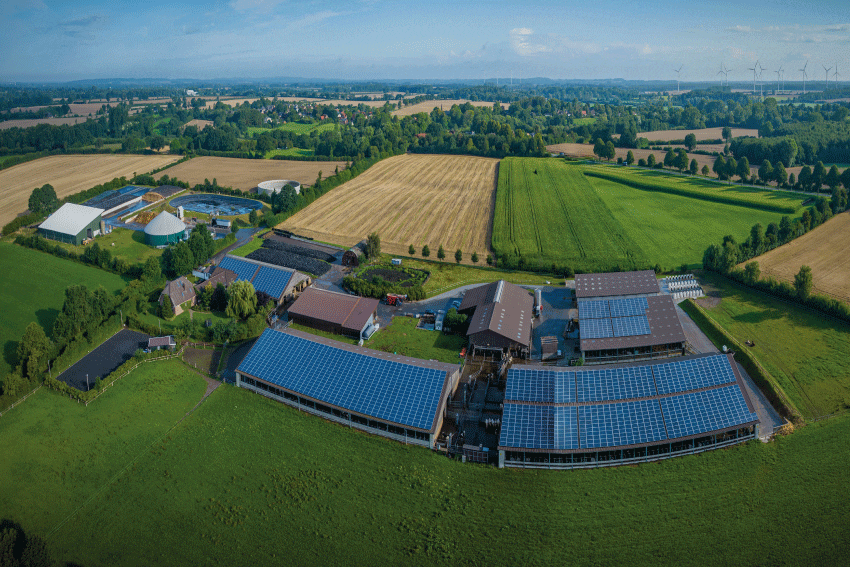
Agriculture & Rural Businesses
Large barns, sheds and workshops can provide excellent solar areas, while battery storage can help move generation into later operating periods or support high farm loads.
The Battery Size Comes From the Data
A commercial battery should be sized around how the site actually uses electricity, not simply matched to the headline size of the solar array.
- Half-hourly or interval consumption profile
- Solar generation profile
- Daytime and evening operating hours
- Peak site demand
- Import and export tariff structure
- EV or future electrification loads
- Available grid capacity
- Backup or resilience requirements
Different Sites Need Different Battery Designs
We are not tied to one architecture. The right design depends on whether the solar is new or existing, the electrical supply, desired battery power and the wider site requirements.
Commercial options can include:
- Hybrid solar + battery systems
- AC-coupled battery storage
- Battery retrofit to existing solar PV
- Single-phase and three-phase configurations
- Scalable storage for larger sites
- Smart energy-management platforms
- Backup or essential-load arrangements
- Existing inverter replacement or integration
How a Commercial Battery Can Be Used
Day to Evening
Store excess midday solar generation and discharge later when the business still has significant demand.
Cheap to Expensive
Where suitable, charge during lower-cost tariff periods and use the stored electricity when imports are more expensive.
Reduce Grid Peaks
Use battery power alongside the grid when site demand rises, subject to the battery power and control strategy.
Essential Loads
Where operational continuity matters, selected loads can be considered as part of a specifically designed backup arrangement.
Not Every Commercial System Has to Be on a Roof
Where suitable land is available, ground-mounted PV can provide an alternative or addition to rooftop generation.
- Suitable for some farms and commercial estates
- Can utilise land where roof area is limited
- Array orientation can be designed around the site
- Can be paired with commercial storage
- Requires appropriate planning, structural and electrical assessment
Roof, Land or Both
For larger sites, the best design may combine more than one available area to maximise usable generation while remaining practical to install and maintain.
Know What the System Is Doing
Commercial energy systems should be monitored after installation so owners can see whether generation and storage are behaving as expected.
Monitoring can include:
- Live solar generation
- Battery state of charge
- Site consumption
- Grid import and export
- Historic generation trends
- Fault and communications alerts
- Performance review against expectations
From Energy Data to a Working Solar + Battery System
Desktop Review
We start with the site, annual consumption, available roof or land and the objective for the project.
Load & Generation Modelling
Where possible, we compare interval consumption with forecast solar generation and battery operation.
Electrical & DNO Design
Inverter power, battery capacity, protection, metering and network requirements are developed around the site.
Installation & Monitoring
The system is installed, commissioned and configured with the monitoring and energy-management strategy agreed for the site.
Renewable Energy and Electrical Competence Together
Commercial battery projects need competent electrical design as well as renewable-energy experience. Mr Solar manages both within the same project team.




Tell Us About the Site
The more energy information you can provide, the more meaningful the initial review can be.
- Name *
- Phone number *
- Street Postcode
- Solar & battery enquiry details
- Annual electricity consumption if known
- Half-hourly data if available
- Existing solar or battery equipment
Commercial Enquiry Form
Keep your existing Contact Form 7 form here. The surrounding section is intentionally clean with no red border.
Build the energy system around how your business actually uses electricity.
Speak to Mr Solar about commercial PV, battery storage, retrofit, three-phase systems, monitoring or an existing installation that needs upgrading.