
More batteries can extend runtime—but compatibility comes first.
Adding storage to an existing system is not simply a matter of connecting another module. Battery generation, chemistry, voltage, age, firmware, state of health, cabling, current limits and manufacturer rules all need checking.
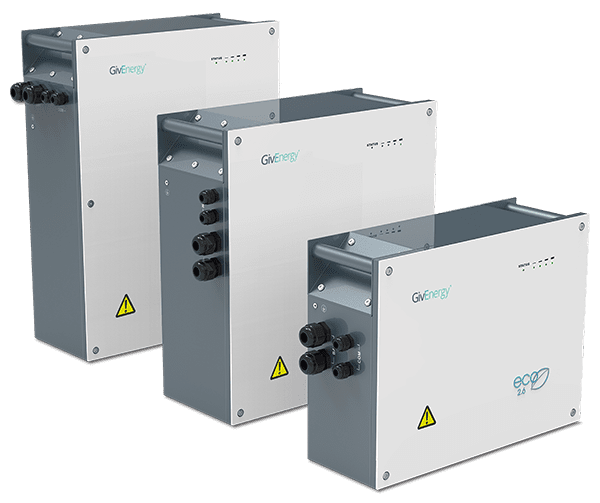
Eight checks protect the existing system.
Model generation
Similar-looking batteries may use different cells, BMS versions or firmware.
Voltage architecture
Low-voltage and high-voltage systems require completely different compatible arrangements.
Age and condition
An older battery may have different usable capacity and resistance from a new module.
Manufacturer rules
Mixing, module order, master-unit selection and maximum quantities vary by product.
Inverter limits
Maximum battery current, charge power and supported capacity still apply.
Cables and protection
Links, fuses, isolators and busbars must be rated and arranged correctly.
Firmware and comms
BMS and inverter communication must remain stable across the bank.
Commissioning
State of charge may need balancing and settings must be verified after expansion.
What does adding capacity change?
Extra kWh usually extends the time the system can support a given load. It may not increase instantaneous power unless the inverter and battery architecture allow it.
Illustrative examples
- Expanding from 5 to 10 kWh roughly doubles the energy window at the same load
- A 3 kW inverter may still remain limited to 3 kW after battery expansion
- Twice the capacity can require twice the charging energy and a longer off-peak window
- If the original battery has degraded, total usable capacity may be less than simple label arithmetic
Figures are simple energy illustrations, not guaranteed runtime. Allow for battery reserve, conversion losses, temperature, ageing and changing household demand.
Identify, check, balance and recommission.
- Photograph every battery and inverter model label
- Check original commissioning and warranty records
- Confirm current approved compatibility documentation
- Assess existing battery health and fault history
- Design cables, protection and physical layout
- Follow the required state-of-charge procedure
- Update settings, firmware and monitoring as appropriate
- Test charging, discharging and any backup mode
Do not DIY battery expansion.
Stored-energy systems can deliver very high fault currents. Incorrect polarity, isolation, fusing or communications can damage equipment and create a serious hazard.
Use a competent installer familiar with the exact system.
Could your battery bank be expanded safely?
Send photographs of the battery and inverter labels, installation date, current capacity and the reason you want more storage.