
Add a battery. Protect your FIT.
Battery storage can often be added to a solar PV system receiving Feed-in Tariff payments—but the equipment, metering, documentation and notifications must be handled correctly.

The FIT scheme closed to new applicants—not to existing members.
Existing accredited installations normally continue receiving support for their eligibility period, subject to the scheme rules and the customer’s FIT terms. Adding storage is possible in many cases, but the proposed electrical layout and any change to generating equipment or metering need careful review.
Official reference: Ofgem guidance for FIT generators.
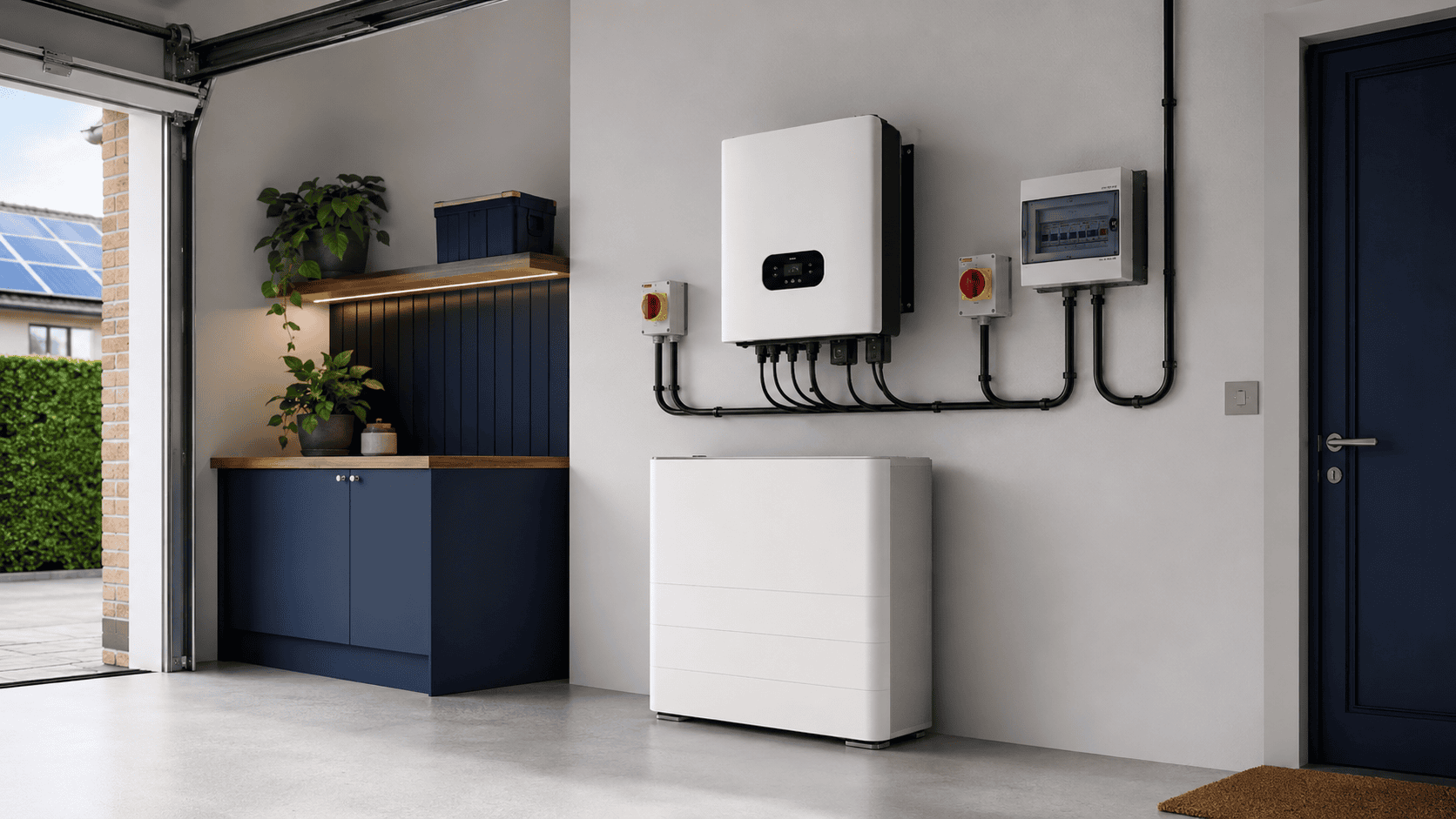
AC-coupled or hybrid battery storage.
Both approaches can work. The right choice depends on the existing accredited system, equipment condition, meter arrangement, electricity use and backup requirements.
Add an AC-coupled battery
A separate battery inverter works alongside the existing solar inverter, allowing a working FIT-era PV inverter and generation-meter arrangement to remain in place where appropriate.
- Often well suited to older FIT systems
- Can avoid replacing a healthy PV inverter
- May charge from surplus solar and off-peak grid electricity
- Capacity and output designed around household demand
Install a hybrid inverter
The existing solar inverter may be replaced with a hybrid unit that manages the PV array and battery together. This needs careful compatibility, metering and FIT review.
- Integrated solar and battery control
- Time-of-use scheduling on compatible equipment
- Replacement appropriately documented
- FIT licensee notified of relevant changes
Five checks before a retrofit.
Check the FIT documents
Confirm accredited capacity, tariff dates, meters and the current FIT licensee.
Preserve generation measurement
The design must prevent imported or previously stored electricity being recorded as eligible FIT generation.
Confirm export treatment
Deemed and metered export arrangements behave differently when more solar energy is stored and used at home.
Notify relevant changes
Battery installation, meter changes, generating-equipment replacement and added capacity may need to be declared.
Keep evidence
Retain invoices, serial numbers, photographs, schematics and commissioning records.
Separate added generation
Additional solar may require separate metering and clear treatment from the accredited array.
Current VAT position
Qualifying electrical battery installations in residential accommodation are included in the temporary zero rate for energy-saving materials until 31 March 2027. The VAT treatment depends on the qualifying installed supply—not simply the purchase of any battery product.
Official reference: HMRC VAT Notice 708/6.
Review first. Design second.
Check
We review the FIT records, current array, inverter, meters and available documents.
Analyse
Battery capacity and output are considered against generation, usage, tariffs and future plans.
Design
We compare suitable AC-coupled and hybrid architectures, including monitoring and backup.
Document
We explain the proposed arrangement and information to provide to the FIT licensee.
Add storage with confidence.
Book a no-pressure review of your existing FIT solar system and the battery options suitable for your home.